Traditional East Asian Esoteric Arts: An Overview of the "Five Arts" — Mountain, Medicine, Destiny, Divination, and Physiognomy
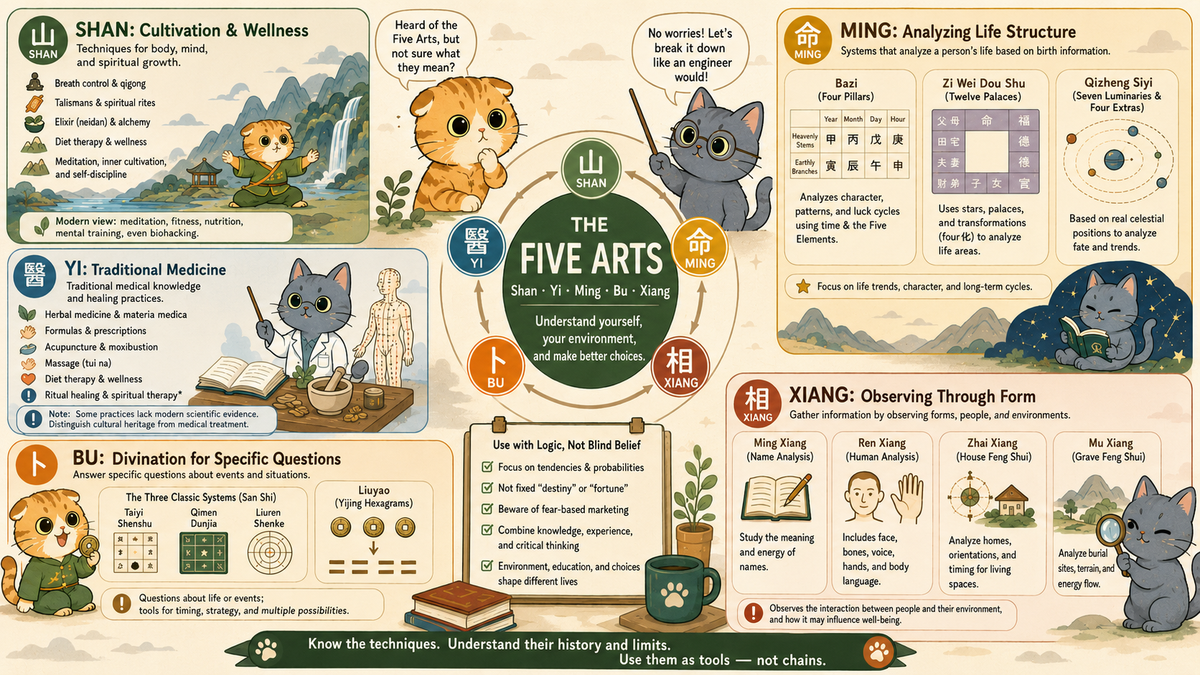
Over the long course of East Asian history, many traditional systems developed around health cultivation, medicine, destiny analysis, divination, and the observation of people and environments. In modern times, these practices are often grouped into five broad categories known as the Five Arts:
Mountain, Medicine, Destiny, Divination, and Physiognomy.
When discussing the Five Arts today, one frequently cited work is Chūgoku Seitō Gojutsu Uranai Zensho (中國正統五術占い全書), published in 1973 by Zhang Yaowen and Sato Rokuryu. The book indeed organizes various traditional arts within the framework of the Five Arts. Historically, however, it is more accurate to regard it as one of the important modern works that systematized and popularized the Five Arts framework, rather than claiming that the term “Five Arts” itself first appeared in 1973.
1. Mountain: Self-Cultivation, Health Preservation, and Training of Body and Mind
山“Mountain” is sometimes interpreted in connection with “Immortal” or “Xian” 仙 traditions. Broadly speaking, it refers to ancient practices concerned with self-cultivation, health preservation, physical and mental discipline, and, in some traditions, the pursuit of transcendence or immortality.
This is a very broad category and may traditionally include:
- Fasting practices such as bigu
- Daoyin exercises
- Breathing practices
- Talismans and ritual methods
- Internal and external alchemy
- Martial arts
- Health preservation
- Dietary therapy
- Meditation and religious cultivation
In modern terms, some of these ideas can loosely be compared with:
meditation, physical fitness, nutrition management, mind-body training, and even what is now called biohacking.
Of course, ancient cultivation traditions blended religion, philosophy, medicine, and ritual techniques. Modern exercise or meditation should therefore not be treated as direct equivalents of ancient “Mountain Arts.” It is better to understand this category broadly as a collection of practices concerned with cultivating and regulating one’s physical and mental condition.
2. Medicine: Traditional Healing Practices
This category is relatively straightforward and primarily concerns systems of traditional Chinese medicine.
It may include:
- Materia medica and herbal medicine
- Herbal formulas
- Acupuncture and moxibustion
- Tui na massage
- Dietary therapy
- Health-preservation practices
In folk traditions, practices such as spirit-calming rituals, zhuyou ritual healing, hypnosis, or other spiritually oriented treatments may also sometimes be grouped under “Medicine.”
From the perspective of modern medicine, however, the level of empirical support for these practices varies greatly. When dealing with actual disease treatment, traditional cultural practices should therefore be distinguished from evidence-based medical care rather than treated as interchangeable.
3. Destiny: Modeling the Long-Term Structure of a Person’s Life
“Destiny arts” refer to systems that use a person’s birth information to construct a fixed model for interpreting personality, long-term tendencies, and possible changes across different stages of life.
Common systems in the Chinese-speaking world include:
- Ziping Bazi
- Zi Wei Dou Shu
- Qi Zheng Si Yu
Some practitioners also use divination systems such as Liu Yao, Qimen Dunjia, or Da Liu Ren for lifelong readings. Strictly speaking, however, these systems were designed for different purposes.
A simple analogy:
You can technically use a fork to drink soup, but it is still not a spoon.
Ziping Bazi
Approximate period of formation: Tang–Song transition; increasingly mature after the Song dynasty
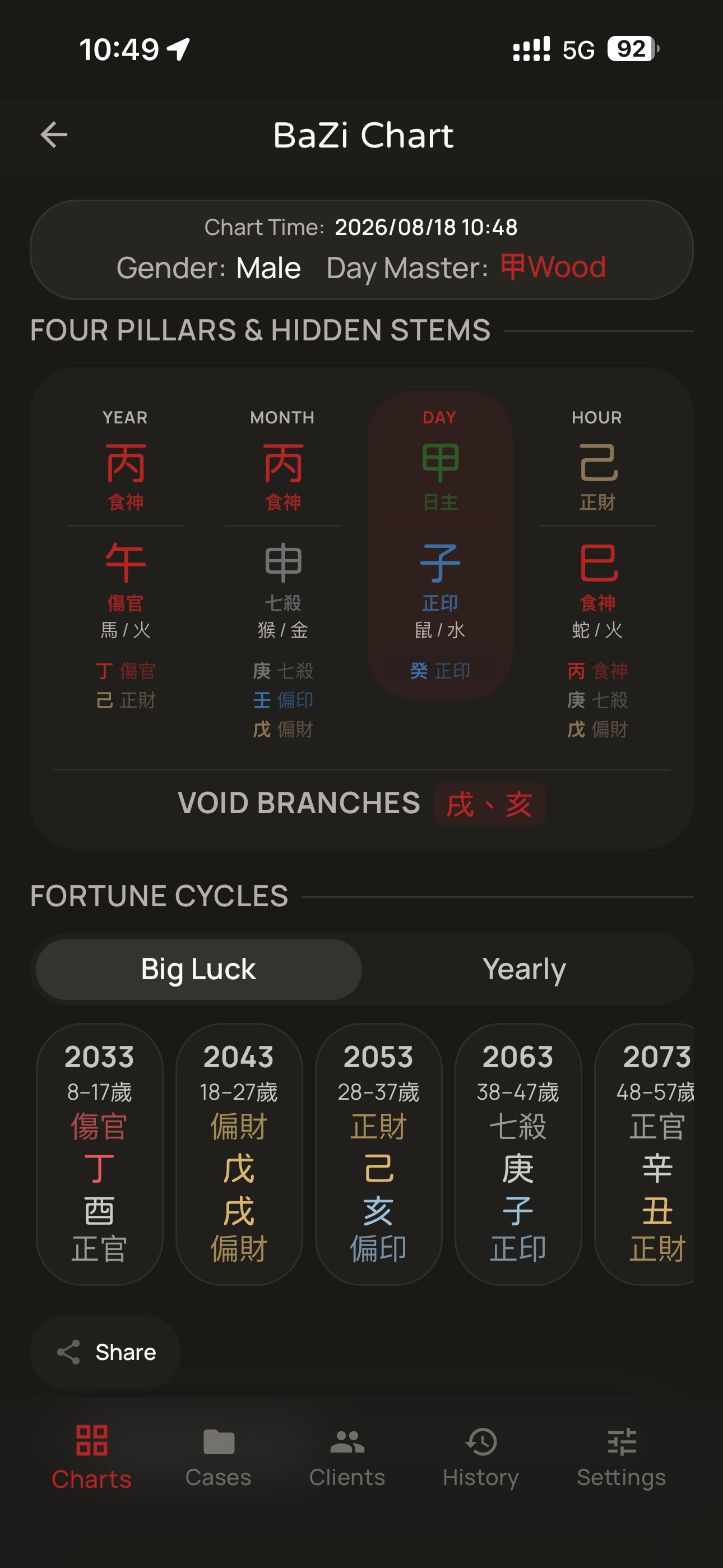
Ziping Bazi is what is commonly known today as the Four Pillars of Destiny.
It uses the traditional Chinese calendrical system of Heavenly Stems and Earthly Branches to convert a person’s:
year, month, day, and hour of birth
into four pairs of characters, forming:
Four Pillars and Eight Characters.
Chinese traditions of interpreting destiny from birth dates can already be seen during the Tang dynasty. By the Song dynasty, the Ziping system centered on the Day Stem gradually took shape. Surviving texts such as Luoluzi Sanming Xiaoxi Fu, later commentaries attributed to Xu Ziping, and Yuanhai Ziping became important materials in the development of Bazi.
After the Song dynasty, this system gradually became one of the major forms of Chinese destiny analysis.
Core Idea
One important idea behind Bazi is:
Human beings do not exist independently of nature; they are born into a specific time, season, and environmental cycle.
Seasonal changes, yin and yang, and the waxing and waning of the Five Phases are therefore used as interpretive factors.
A reading may involve concepts such as:
- Day Master
- Month Command
- Strength and weakness
- Structure or pattern
- Ten Gods
- Useful God
- Ten-year Luck Pillars
- Annual influences
Different schools assign different levels of importance to these elements.
Limitation
One issue I find particularly interesting is:
Traditional Bazi theory developed primarily in Northern Hemisphere cultures. How should it handle people born in the Southern Hemisphere, where the seasons are reversed?
Different modern schools propose different solutions, but there is currently no sufficiently validated consensus demonstrating that any one approach is definitively correct. This is also an area I would personally like to study further.
Personal View
I personally favor Bazi partly because it has accumulated a substantial body of literature over a long historical period.
A long history does not prove that a system is true, but it does mean that later practitioners have access to a large number of cases, texts, and theories for comparison.
What I strongly dislike is the modern tendency to exploit fear through simplistic claims about “missing elements.”
For example:
“You lack Fire, so buy lots of red objects.”
“You lack Water, so buy crystals or install a fountain.”
If it were really that simple, should someone lacking Fire move next to a volcano?
Should someone lacking Water move into the ocean?
This reduces a complex interpretive system into a marketing slogan designed to sell products.
Zi Wei Dou Shu
Approximate historical development: traditionally traced back to the Song dynasty, while more mature surviving texts mainly appear from the Ming and Qing periods onward
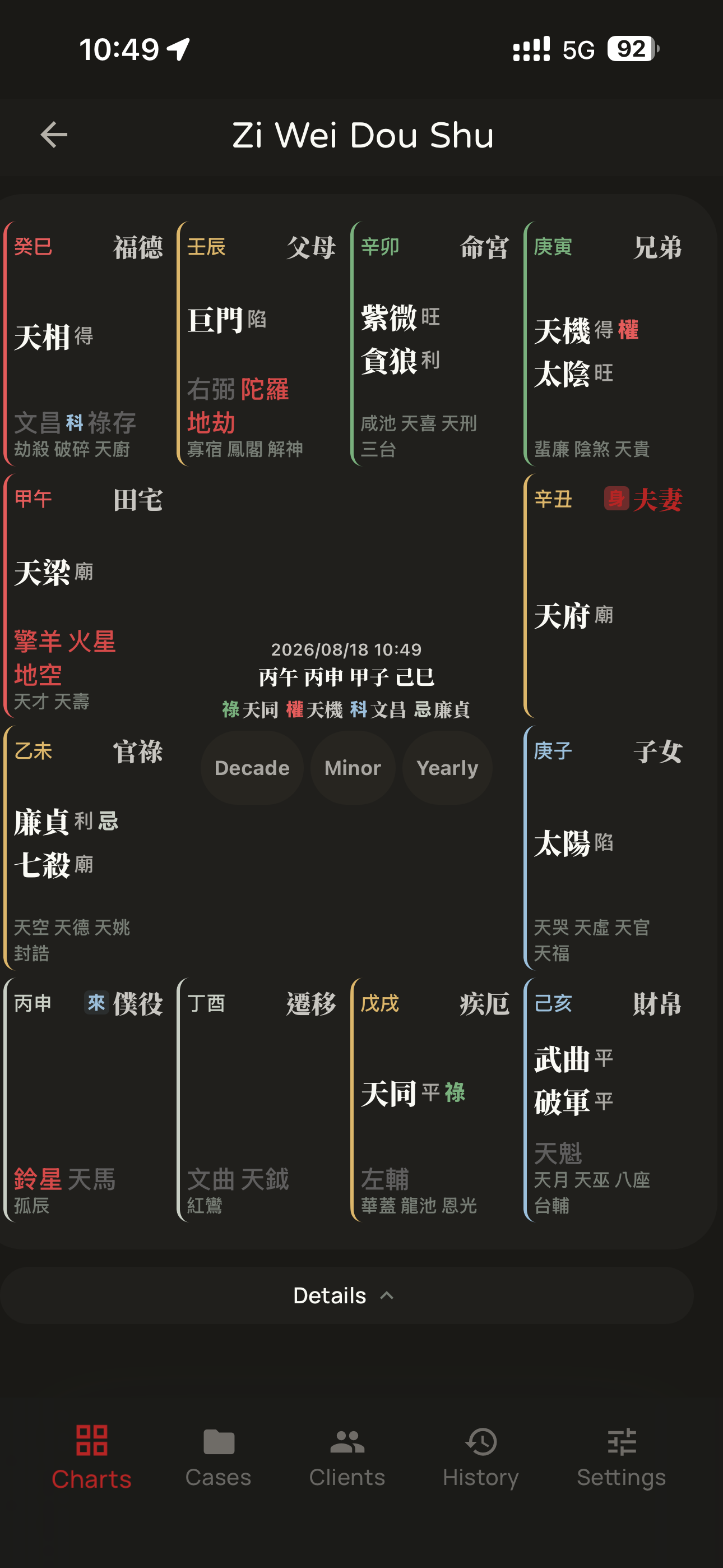
The biggest difference between Zi Wei Dou Shu and Bazi is that Zi Wei Dou Shu constructs a twelve-palace chart and interprets different areas of life through the placement of symbolic stars.
One important point needs to be emphasized:
Many of the “stars” in Zi Wei Dou Shu are not actual astronomical bodies in the modern scientific sense. They are symbolic names within an interpretive model.
So just because they are called “Zi Wei Star,” “Tian Fu Star,” or “Wu Qu Star” does not mean the system is calculating the physical positions of those celestial objects.
Zi Wei Dou Shu can broadly be divided into three major components:
Palaces, Stars, and Four Transformations.
Palaces
The twelve palaces represent different areas of life, such as:
- Life
- Siblings
- Marriage
- Children
- Wealth
- Health
- Travel
- Friends
- Career
- Property
- Well-being
- Parents
Stars
The core consists of fourteen major stars, supplemented by:
- Auxiliary stars
- Malefic stars
- Miscellaneous stars
- Shen-sha symbolic markers
These layers add additional qualities and attributes to the chart.
Four Transformations
The Four Transformations are:
Transformation of Prosperity, Power, Academic or Reputational Merit, and Obstruction
commonly known as:
Hua Lu, Hua Quan, Hua Ke, and Hua Ji.
They can be understood as four different states that certain stars take under specific conditions and are an important part of interpreting change and dynamics in a Zi Wei Dou Shu chart.
Over time, many schools developed, including:
- Southern School
- Northern School
- Zhongzhou School
- Qintian tradition
- Empirical or verification-based schools
and others.
Limitation
Compared with Bazi, the surviving documentary tradition of Zi Wei Dou Shu appears relatively late.
As a result, different schools often interpret the same chart in dramatically different ways. Two practitioners may disagree even on what the primary basis of interpretation should be.
Personal View
I think Zi Wei Dou Shu contains many interesting and highly detailed ideas, but its biggest problem is also this:
It developed in too many directions without enough later consolidation.
Sometimes it feels like everyone is watching the same Spider-Man movie.
One group says:
“Peter Parker is the protagonist.”
Another says:
“No, Spider-Man is the protagonist.”
But—
Aren’t Peter Parker and Spider-Man the same person?
I am also skeptical of promotional claims describing Zi Wei Dou Shu as an “art of emperors.”
In many cases, such labels seem more like later narratives intended to give the system greater prestige and authority.
My position is:
Zi Wei Dou Shu has distinctive features that are worth studying, but it still needs a great deal of historical comparison, consolidation, and validation.
Qi Zheng Si Yu
Major period of development: Tang dynasty onward
Qi Zheng Si Yu is one of the important systems of traditional Chinese astrological destiny analysis.
The “Seven Luminaries” generally refer to:
the Sun, Moon, Mercury, Venus, Mars, Jupiter, and Saturn.
The “Four Residuals” involve concepts such as:
Rahu, Ketu, Zi Qi, and Yue Bo.
Unlike Zi Wei Dou Shu:
the core calculations of Qi Zheng Si Yu do involve actual astronomical positions.
During the Tang dynasty, substantial bodies of Indian astronomy, calendrical knowledge, and astrology entered China. Concepts such as Rahu and Ketu came with this transmission and were gradually integrated with Chinese systems such as yin-yang, the Five Phases, and the Twenty-Eight Lunar Mansions.
Therefore, describing Qi Zheng Si Yu as a purely indigenous Chinese astrological system would not be entirely accurate.
It is better understood as:
a Chinese astrological system that developed through the long-term integration of Chinese astronomical traditions with Indian astrological knowledge.
Limitation
Its biggest problem is:
complexity.
There are many planets, houses, degrees, symbolic markers, and predictive techniques.
In the past, charts also had to be calculated manually rather than generated instantly by software, so the learning curve was extremely high.
Compared with Bazi and Zi Wei Dou Shu, modern Chinese-language teaching materials and large collections of case studies are also much harder to find.
Personal View
I find this system extremely interesting.
One reason is that, at least at the level of its model, it directly incorporates the movement of actual celestial bodies rather than relying entirely on symbolic or virtual stars.
The downside is simple:
It is genuinely difficult to learn.
There are fewer resources, chart construction is complicated, and historical texts are difficult to read. As a result, it is naturally much less widespread today than Bazi or Zi Wei Dou Shu.
4. Divination: Analyzing a Specific Event
The difference between “Destiny” and “Divination” can be summarized simply as:
Destiny asks about your life; divination asks about an event.
For example:
- Will this partnership succeed?
- Should I change jobs?
- What is the other person’s current attitude?
- How will this project develop?
- Which is better: option A, B, or C?
Questions with a specific issue and a specific time frame are typical uses of divination.
So if someone uses a destiny system and asks, “Should I change jobs right now?” or “Will I meet a romantic partner in the near future?” I would consider that somewhat mismatched.
Destiny arts are better suited to examining long-term structure and broader life tendencies, while divination is usually better for short-term, specific events.
It is like trying to examine a cell with a telescope. The telescope itself is not bad; it is simply the wrong tool for that particular job.
Among traditional East Asian divination systems, one of the most famous groupings is:
The Three Methods
- Taiyi
- Qimen Dunjia
- Da Liu Ren
Classical texts do contain references to the idea of the “Three Methods.” Qing-period Liu Ren literature, for example, retrospectively describes Qimen, Taiyi, and Liu Ren as a traditional triad.
If we roughly rank them today by the amount of surviving literature, transmission, and active practitioners, my personal order would be:
Liu Ren > Qimen > Taiyi
This does not mean the earlier items are necessarily “more accurate.” It simply means they are easier to study because more complete materials survive.
Da Liu Ren
Documented history: foundations can be traced at least to the Han and Wei periods; by the Tang and Song dynasties it was already an important divination system
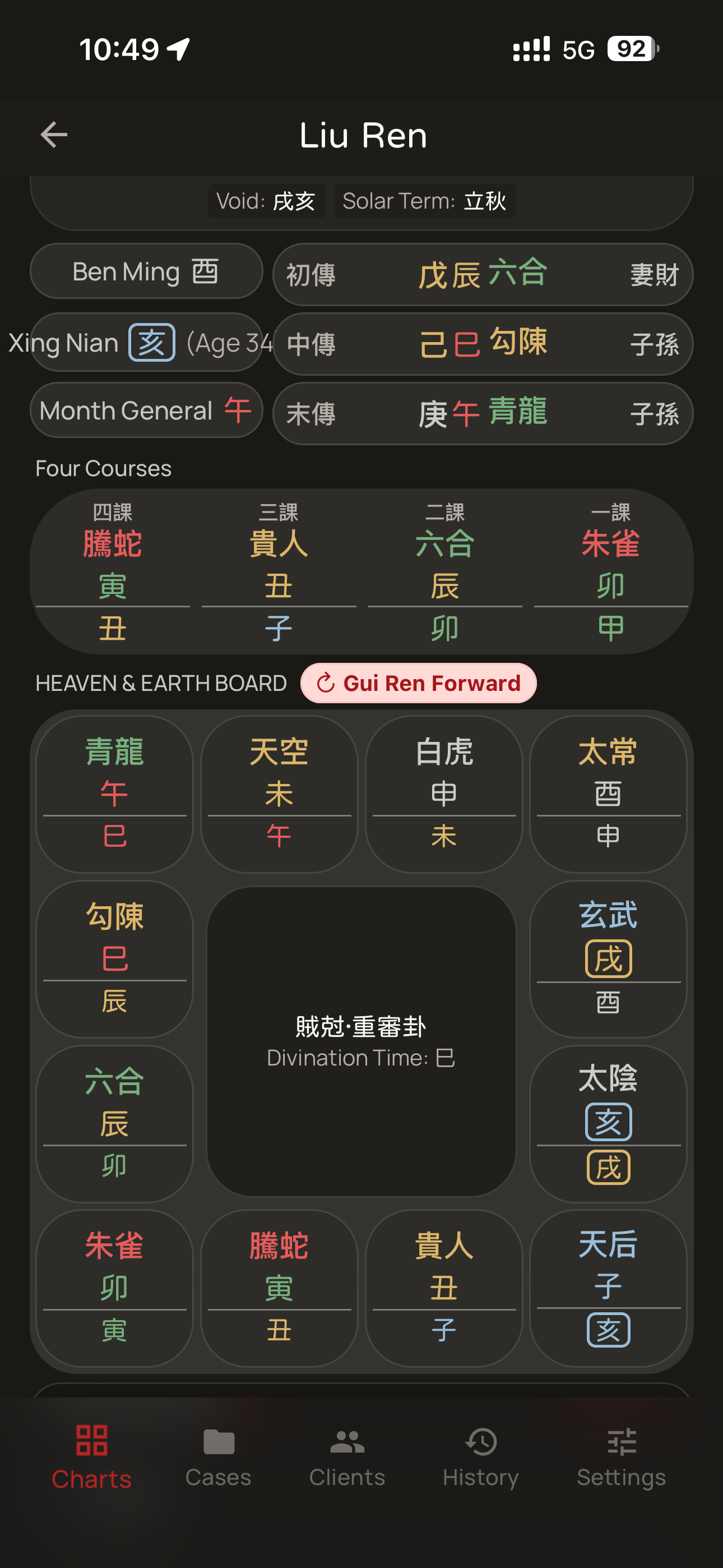
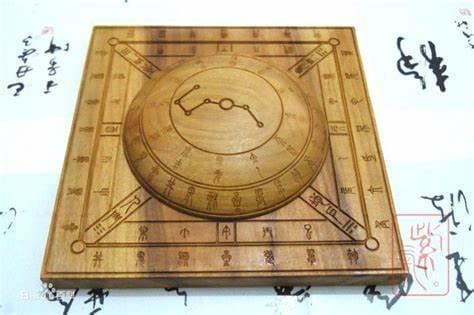
Liu Ren Shen Ke, commonly known as Da Liu Ren, is a divination system built from elements such as Heavenly Stems and Earthly Branches, the Monthly General, Heaven and Earth plates, Four Lessons, Three Transmissions, and Twelve Generals.
One particularly interesting feature is that Liu Ren did not remain confined to China. It also entered Japanese Onmyodo traditions.
Senji Ryakketsu, traditionally attributed to the Heian-period onmyoji Abe no Seimei (921–1005), is an important text associated with Liu Ren. It begins by explaining the Four Lessons and Three Transmissions and is regarded as an important source for understanding Heian-period Onmyodo and Liu Ren-style divination.
What I Like Most
The most distinctive part of Liu Ren, in my view, is:
the Four Lessons and Three Transmissions.
I see this as a model that can simultaneously examine:
- Myself
- The other person
- The matter being asked about
- The interaction between the parties
- The beginning of an event
- Its middle stage
- Its eventual outcome
So rather than merely answering:
“Will it happen?”
it can potentially be broken down into:
Why is this happening? How will the situation evolve? What will the final result look like?
It is also one of the divination systems I personally use most often and know best.
Qimen Dunjia
Early textual evidence: increasingly visible after the Wei, Jin, and Northern and Southern Dynasties; especially large amounts of material survive from the Ming and Qing periods
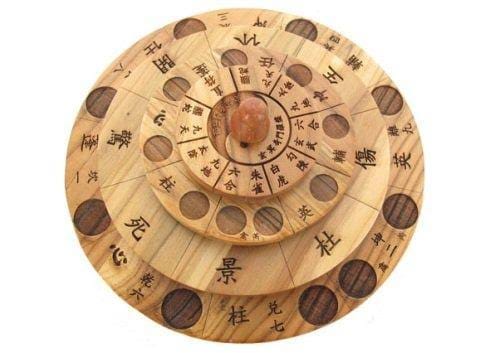
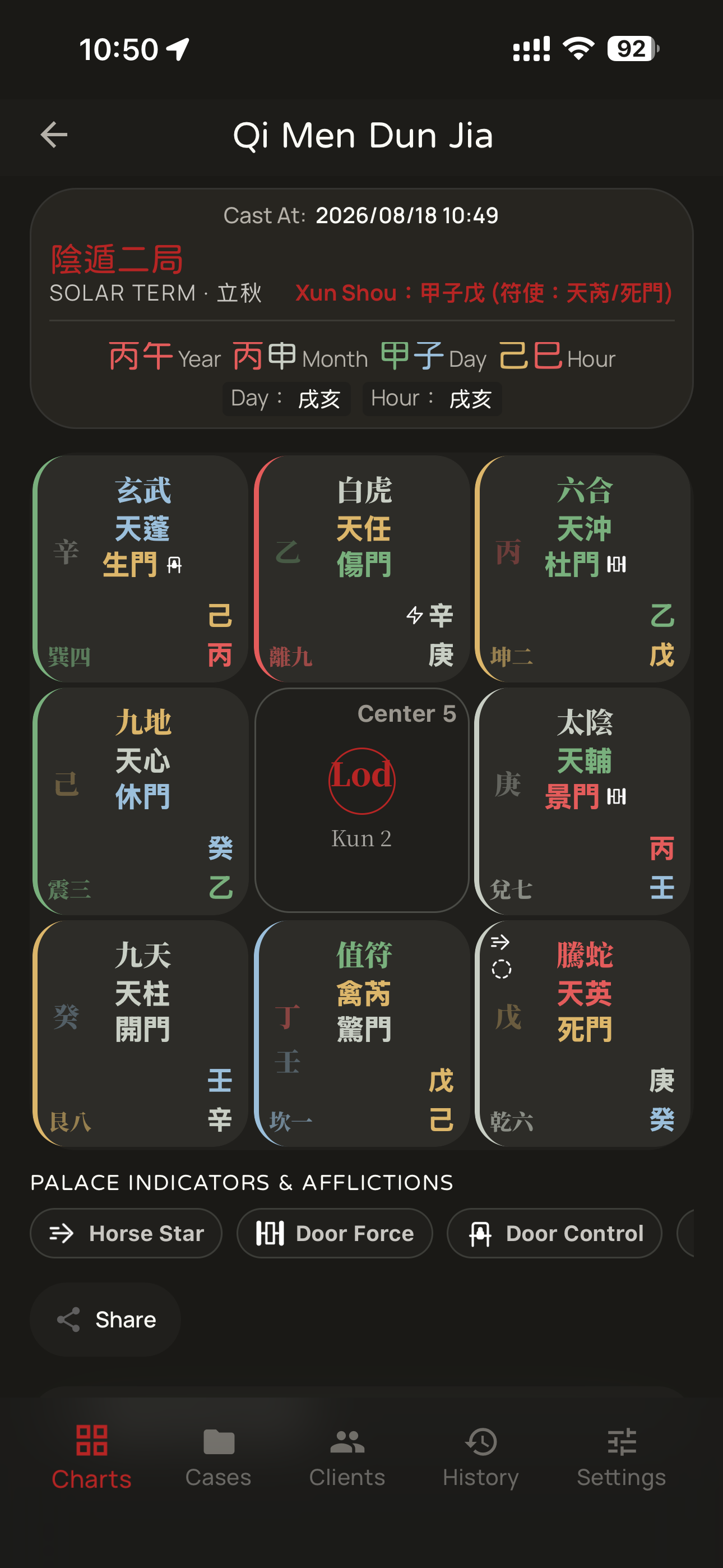
Qimen Dunjia is another of the Three Methods.
It combines:
- Heavenly Stems
- Nine Palaces
- Eight Gates
- Nine Stars
- Eight Spirits
- Time
- Direction
within a single model.
Its origins are surrounded by many legends involving figures such as the Yellow Emperor, the Nine Heavens Mysterious Lady, and Zhuge Liang.
These stories should be separated from historically verifiable textual development.
Modern scholarship may trace some of the cosmological foundations of Qimen back to earlier periods, but the formation and transmission of the complete system took place over a long period of time.
Historically, Qimen was strongly associated with military affairs, spatial positioning, and timing.
This makes it somewhat different from systems that merely ask for an outcome.
It often deals simultaneously with:
time + space + action strategy.
This is why later applications developed around questions such as:
“Things are unfavorable right now. Which direction should I move toward?”
“What time should I act?”
“What kind of person should I seek out?”
These are essentially strategic or operational applications.
Personal View
I think this is a very interesting design.
Unfortunately, modern practice sometimes reduces it to ideas such as:
“Go in this direction and stay there for fifteen minutes to improve your luck.”
“Place this object in this location to attract wealth.”
Then, inevitably, someone starts selling products.
To me, this loses one of the most interesting aspects of Qimen:
If the current situation is unfavorable, how can you adjust your actions using the conditions that are actually available?
Rather than treating it as magic, I prefer to understand it as a kind of ancient situational analysis model.
Taiyi
One of the ancient Three Methods; historically important but relatively rare in modern transmission
Taiyi, also called Taiyi Shu or Taiyi Shenshu, is one of the traditional Three Methods.
A number of historical texts still survive, so it would be too strong to say that the system has been completely lost.
A more accurate description would be:
Compared with Liu Ren and Qimen, Taiyi has far fewer modern practitioners, living transmission lines, and comprehensive teaching materials.
As a result, modern Taiyi materials often combine the study of classical texts with reconstructions and reinterpretations by more recent researchers.
This creates a practical problem:
Which parts represent older methods? Which are later reconstructions? Which are entirely modern interpretations?
That distinction is often difficult to make.
For this reason, I currently take a relatively cautious approach to Taiyi.
Liu Yao / Wen Wang Gua
Intellectual roots can be traced to the pre-Qin Zhou Yi, while commonly used modern methods developed gradually over later centuries
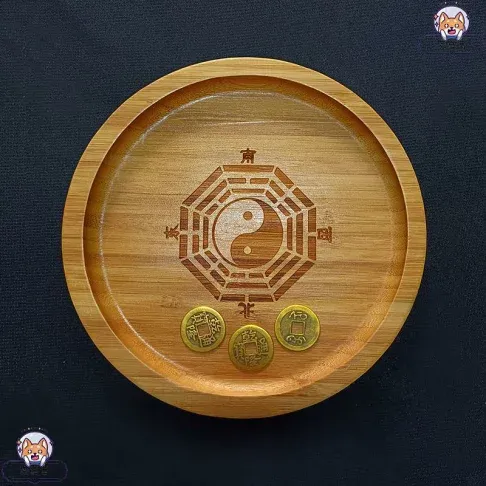
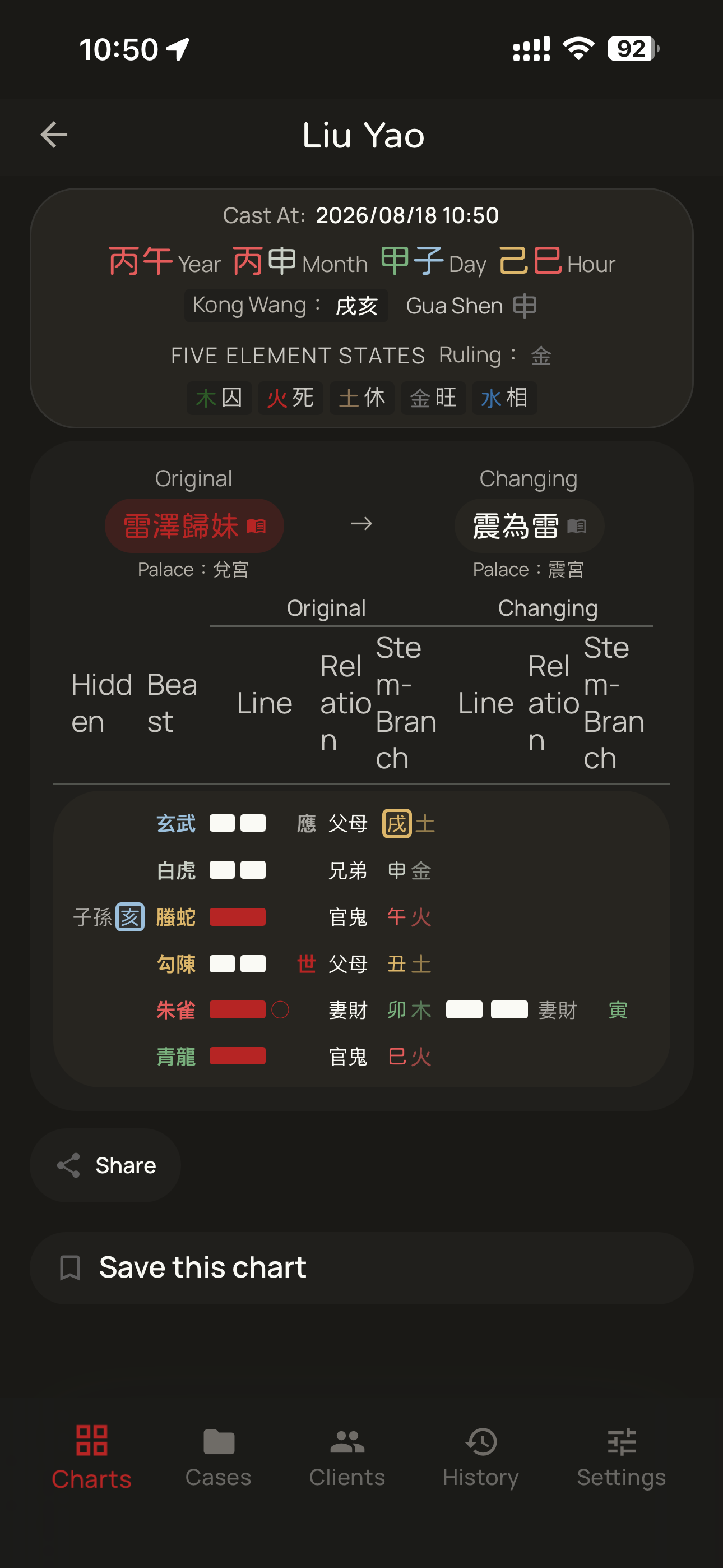
The cultural roots of Liu Yao are closely connected with the Zhou Yi, or Book of Changes.
Early divination associated with the Zhou Yi used yarrow stalks. Later traditions gradually developed more elaborate systems involving Na Jia, the Six Relations, Self and Other lines, and daily and monthly influences.
Today, one of the most common methods is:
using three coins and tossing them six times to generate a six-line hexagram.
Compared with the Three Methods, Liu Yao has one major advantage that I particularly like:
speed.
Each new question can also be used to generate a separate divination structure.
How I Choose Between Liu Ren, Qimen, and Liu Yao
It depends on the type of question.
Time-based systems such as Liu Ren and Qimen do not change dramatically within a short time interval.
So if someone suddenly asks:
- Is A good?
- What about B?
- What about C?
- What about D?
- What if I change it to E?
practical difficulties begin to appear.
Therefore, when there are:
many options that need to be compared individually, or many follow-up questions
I usually prefer:
Liu Yao.
But when the question is:
one specific event that I want to analyze in depth, including its structure and development
I tend to prefer:
Liu Ren or Qimen.
5. Physiognomy and Forms: Interpreting Information Through Appearance and Structure
The simplest way to understand “Physiognomy” or “Forms” is:
interpreting information through visible form, structure, and environment.
Common subcategories include:
- Name analysis
- Human physiognomy
- Residential forms
- Burial-site forms
Name Analysis
Modern name-analysis traditions in the Chinese-speaking world include many different schools and should not all be treated as a single historical lineage.
One particularly influential modern system was developed by the Japanese practitioner Kumasaki Ken’o (1882–1961).
A historically cautious way to describe it is:
Kumasaki-style name analysis gradually took shape and became popular from the late 1920s to the early 1930s.
Records indicate that Kumasaki published related theories in the Japanese women’s magazine Shufu no Tomo in 1929, and published Seimei no Tetsuri in 1931.
His approach later had considerable influence on Japanese and broader East Asian systems of name analysis.
So when someone claims:
“This name-analysis system was a secret technique used by Chinese emperors thousands of years ago,”
I usually become very skeptical.
At least some of the stroke-count methods that are widespread today are much more modern than many people assume.
Human Physiognomy
Physiognomic practices appeared very early in China.
By the pre-Qin period, there were already accounts of judging personality or destiny through physical appearance and bone structure.
By the Han dynasty (202 BCE–220 CE), related methods had been organized into a more developed category known as “Form Methods,” which included not only facial analysis but also bone structure, voice, posture, and behavior.
Later traditions added systems involving facial features, the Three Divisions, Twelve Palaces, complexion, and other methods.
Human physiognomy may include:
- Facial reading
- Bone reading
- Voice reading
- Palmistry
- Body reading
The core idea is to interpret a person through outward characteristics.
Similar traditions also exist in many other cultures, so physiognomy is not uniquely Chinese.
Limitation
A person’s appearance can change due to:
- Age
- Health
- Environment
- Emotional state
- Cosmetic procedures
For that reason, it is difficult to justify making lifelong conclusions based on one isolated physical feature.
Personal View
I prefer to think of physiognomy as a method for observing a person’s current condition or tendencies, rather than seeing a nose or eyebrow and immediately declaring what someone’s entire life will be like.
Residential and Burial Forms: Feng Shui
Residential and burial-site analysis are broadly grouped today under the term Feng Shui.
Feng Shui has a long history. By the Han dynasty, we can already find techniques related to residential siting, terrain, buildings, and the interpretation of auspicious and inauspicious spatial conditions.
Over time, it developed into two broad directions:
Yang Residence: homes, cities, and buildings used by the living
Yin Residence: burial sites for ancestors or the deceased
Between the Wei-Jin period and the Tang-Song eras, burial-related Feng Shui developed further.
The Eastern Jin scholar Guo Pu (276–324) and the Book of Burial are often mentioned in traditional accounts, although whether the surviving Book of Burial was entirely written by Guo Pu remains historically disputed.
Later Feng Shui developed many different schools.
Some emphasize mountains, water, and terrain; others emphasize direction, time, and building orientation, including traditions such as:
- San He
- San Yuan
- Xuan Kong
- Eight Mansions
Some schools focus on:
- Terrain
- Mountains and water
- Direction
Others emphasize:
- Construction date
- Cyclical periods
- Orientation
Some also incorporate:
- Birth information of the occupants
Because of this, simply asking “How does Feng Shui judge a house?” is actually too broad.
Different schools may not even be examining the same variables.
Limitation
There are many schools, and the same house can receive very different evaluations depending on the method being used.
Personal View
I remain skeptical that Feng Shui literally has the power to change a person’s destiny.
However, from what I have learned, part of the tradition can reasonably be understood as accumulated observations made under historical living conditions—such as the importance of clean water, ventilation, terrain, sunlight, and the surrounding environment.
For me, the most valuable aspect of Feng Shui is its attention to the relationship between people and their environment.
Claims such as “putting a crystal here will change your luck,” however, are something I treat much more cautiously.
Personal Conclusion: Why I Prefer Systems With Longer Historical Transmission
I personally prefer systems that have:
a longer documentary tradition and enough surviving texts and historical cases to allow cross-comparison.
The reason is simple.
Destiny analysis and divination are already extremely difficult fields to validate using modern scientific methods.
Given that limitation, I would at least prefer a system that has passed through:
long periods of use, multiple generations, and repeated examination by different practitioners.
A long history does not mean a system is necessarily correct.
Ancient people could also be wrong.
But if someone invented a method yesterday and today tells me:
“All of my clients say it is incredibly accurate.”
that is still very weak evidence from my perspective.
Traditional Does Not Mean Correct, and New Does Not Mean Wrong
I do not believe that newer techniques are automatically invalid.
After all, every traditional system was once new.
The issue is not whether something is old or new.
The real questions are:
Do you know where it came from?
Do you know which parts are genuinely old and which were added later?
Do you know which claims are actual theory and which are simply promotional stories?
That is what matters to me.
What I Dislike Most: Selling Fear
One of the biggest problems in the modern fortune-telling and Feng Shui industries is the tendency to reduce complicated systems into products:
“You lack Water, so buy this.”
“You are offending Tai Sui this year, so buy that.”
“Your house is missing a wealth sector, so put this object there.”
“Your energy field is bad, so wear this.”
Conveniently, every problem seems to have a product available for purchase.
If we follow that logic:
If you lack Fire, should you live next to a volcano?
If you lack Water, should you move into the ocean?
If you lack Metal, should you move into a mine?
And if I live inside a crystal cave, does that mean I will have unlimited good luck forever?
Whenever a body of knowledge becomes:
“Every problem can be solved by buying something,”
I become extremely cautious.
Destiny Analysis Is Not the Same as Fatalism
Another idea I want to emphasize is:
Destiny analysis ≠ fatalism.
Even if we temporarily accept the basic assumptions of destiny systems, a person’s life is still influenced by far more than birth time alone.
There are also:
- Family environment
- Education
- Country
- Historical period
- Social class
- Health
- Relationships
- Random events
- Individual choices
Even twins born only minutes apart can grow up to have very different lives.
So I prefer to understand “destiny” as:
a person’s initial conditions and tendencies.
Certain personality traits and circumstances may make you more likely to choose one path over another.
Over time, repeated choices form the life trajectory that we observe.
But different environments, different people, and different decisions at crucial moments can still produce very different outcomes.
Conclusion: Understanding a System Matters More Than Believing in It
For me, the most important question when studying these traditional arts is not:
“Is it accurate?”
The first question should be:
“What exactly is it?”
When did it develop?
What historical texts survive?
What problems was it originally designed to solve?
Is the version used today actually the same as the one used in the past?
Which claims have textual support?
Which are later interpretations?
Which are simply commercial packaging?
Once you understand those questions, you can choose to believe in the system or not.
You can use it, or you can treat it purely as a subject of historical, cultural, or intellectual study.
But at the very least, you will be less likely to become frightened simply because someone says:
“Your destiny is missing this element.”
What matters most is understanding a system’s history, its limitations, and the kinds of problems it was originally designed to address.
For me, the purpose of studying these arts is not to let them control my life.
It is to gain another framework for understanding myself, understanding my environment, and thinking through choices.
At the very least, no one should be pushed into fear—or away from the path they would otherwise choose—simply because someone tells them:
“Your destiny is missing something.”